
The weather was fittingly dark, cold, rainy and very windy as our friend Rona Melnick drove us south from Jerusalem to the Gaza Envelope. Rona and her husband had guided us on our last trip to Israel some 7 years ago. We had become good friends and were thrilled to see her again and catch up.
Slightly more than two years had passed since the morning of October 7, 2023, when some 5,600 terrorists stormed across the border, killing 1,200 people and abducting 251 hostages to Gaza. Among the hostages were 42 children, nine of them under the age of five.
Sderot
We stopped first at the border city of Sderot. Established in the 1950’s to house immigrants from Iran and Kurdistan, Sderot’s population grew to include refugees from Romania, North Africa and Russia and now totals over 30,000. But the city’s location just one mile from the Gaza border left Sderot vulnerable to frequent missile fire from Hamas, beginning with the second intifada in 2000. Rocket attacks killed 13 people, wounded dozens, caused millions of dollars in damage and profoundly disrupted daily life. Sderot children grew up routinely running to underground bomb shelters outfitted with play areas funded by JNF. Persistent sirens warning of an incoming attack, followed by loud explosions and damage to buildings created severe psychological trauma for many. We were told that some eighteen-year-old recruits to the army from Sderot were reported to be wetting their beds at night.
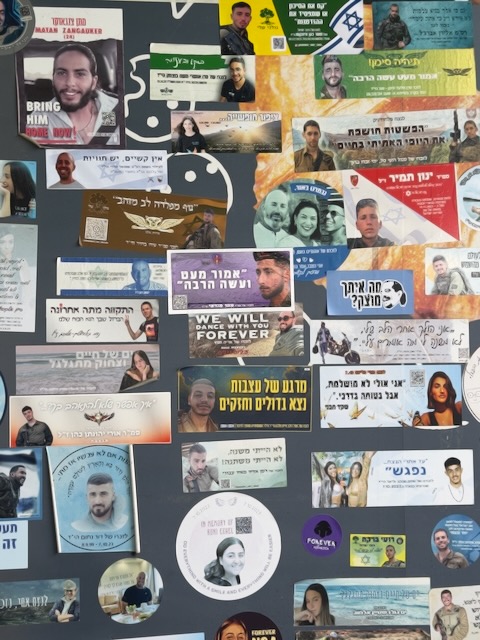
At the local memorial for victims of Hamas shellings prior to October 7, we saw hundreds of stickers with the faces of October 7 hostages pasted on the walls. As former New Yorkers, we felt an eerie reminder of the days following 9/11 when posters of the missing went up all over the city and their smiling faces, likely dead, stared at us, the living.
In the early morning hours of Oct 7, 2023, Hamas launched 41 rockets into Sderot and thousands of Nukhba terrorists invaded, killing 73 people. Terrorists barricaded themselves into the police station for hours and were only eliminated when Israelis bulldozed the building. The site where the police station once stood is now the Sderot Memorial and Heroes Park.
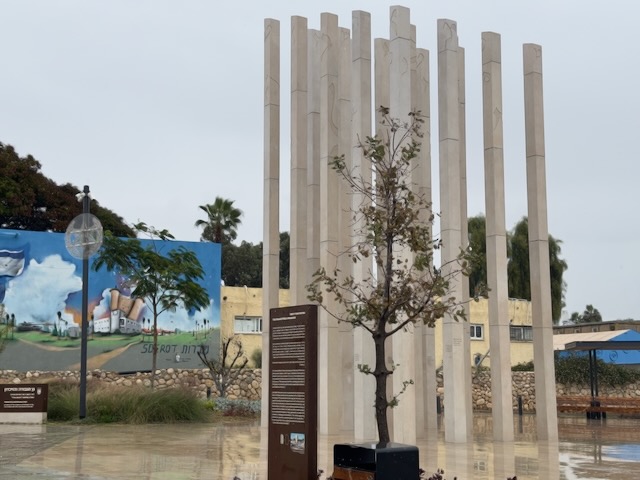
On Oct 8, over 90% of the city was evacuated. Six months later residents began returning. Today, Sderot is thriving, and real estate values are up. As we drove through the rain, we saw a lovely city with many large newly built homes.
Nahal Oz Memorial
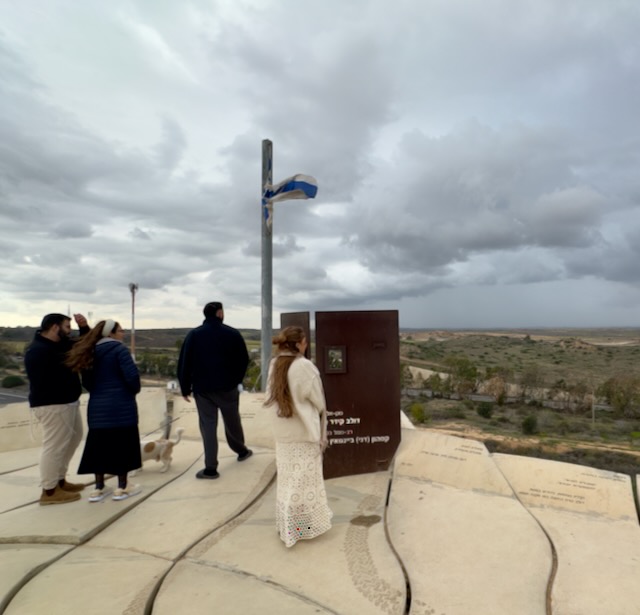
Next we stopped at another October 7 memorial funded by JNF, this one for the young slain female lookout soldiers at Nahal Oz. For months before Hamas’s onslaught, the lookout soldiers reported signs of suspicious activity along the Gaza border. No action was taken by senior officers who received the reports, and the information was disregarded as unimportant by intelligence officials. These observations by 18-year-old girls conflicted with what Israelis call the “conceptzia”: Hamas was a minor player in the terrorism theater that could be managed by the IDF periodically going into Gaza to “mow the grass”, while the real threat lay with Hezbollah up north.
Photos of lookout soldiers killed on October 7 at Nahal Oz (left); walking up the hill to the memorial (right)
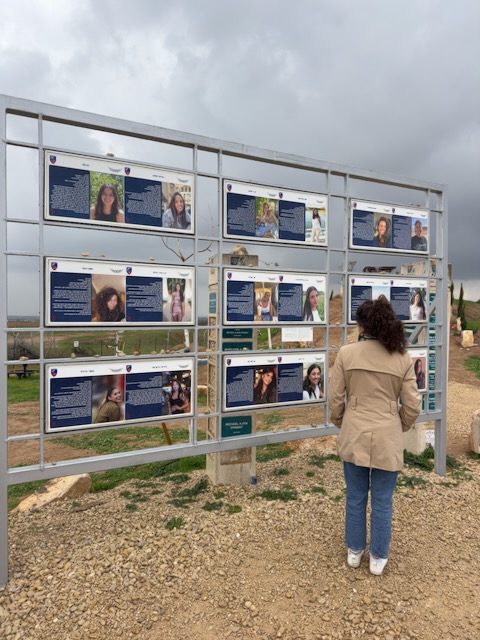
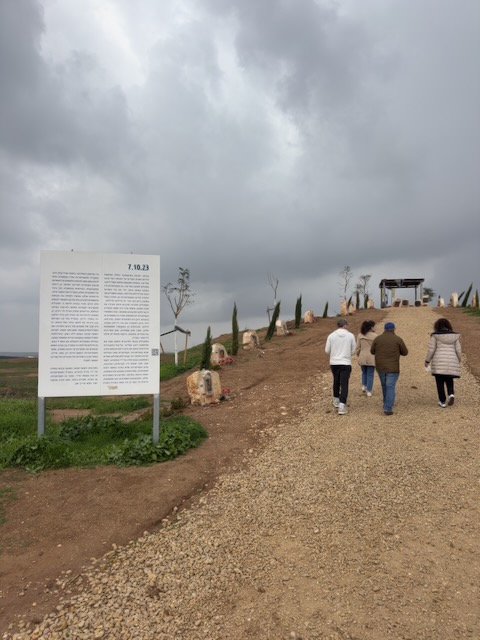
Fifty-three soldiers, including 15 of the young lookouts, died at Nahal Oz on the morning of October 7. Most of the soldiers had run to the bomb shelter after attempting to briefly fight. Seven were kidnapped from the shelter after hours of being forced to watch their dead friends lie beside them.
A few weeks later, the IDF rescued one of the hostages, 18-year-old Ori Megidish, along with the body of Ori’s friend, Noa Marciano, killed in captivity. Ori had been held in an apartment hit by an Israeli airstrike. She suffered a fractured skull and was treated without anesthesia at a Gaza hospital. Several months following her rescue, Ori rejoined the IDF in military intelligence.
Nineteen-year-old Na’ama Levy was another of the lookouts brutally abducted. This image of her with bound hands and bloodied sweatpants was widely circulated by the terrorists. Na’ama, along with four other hostages from Nahal Oz, was finally released in January 2025 after more than 450 days in captivity.
Nova Festival Memorial
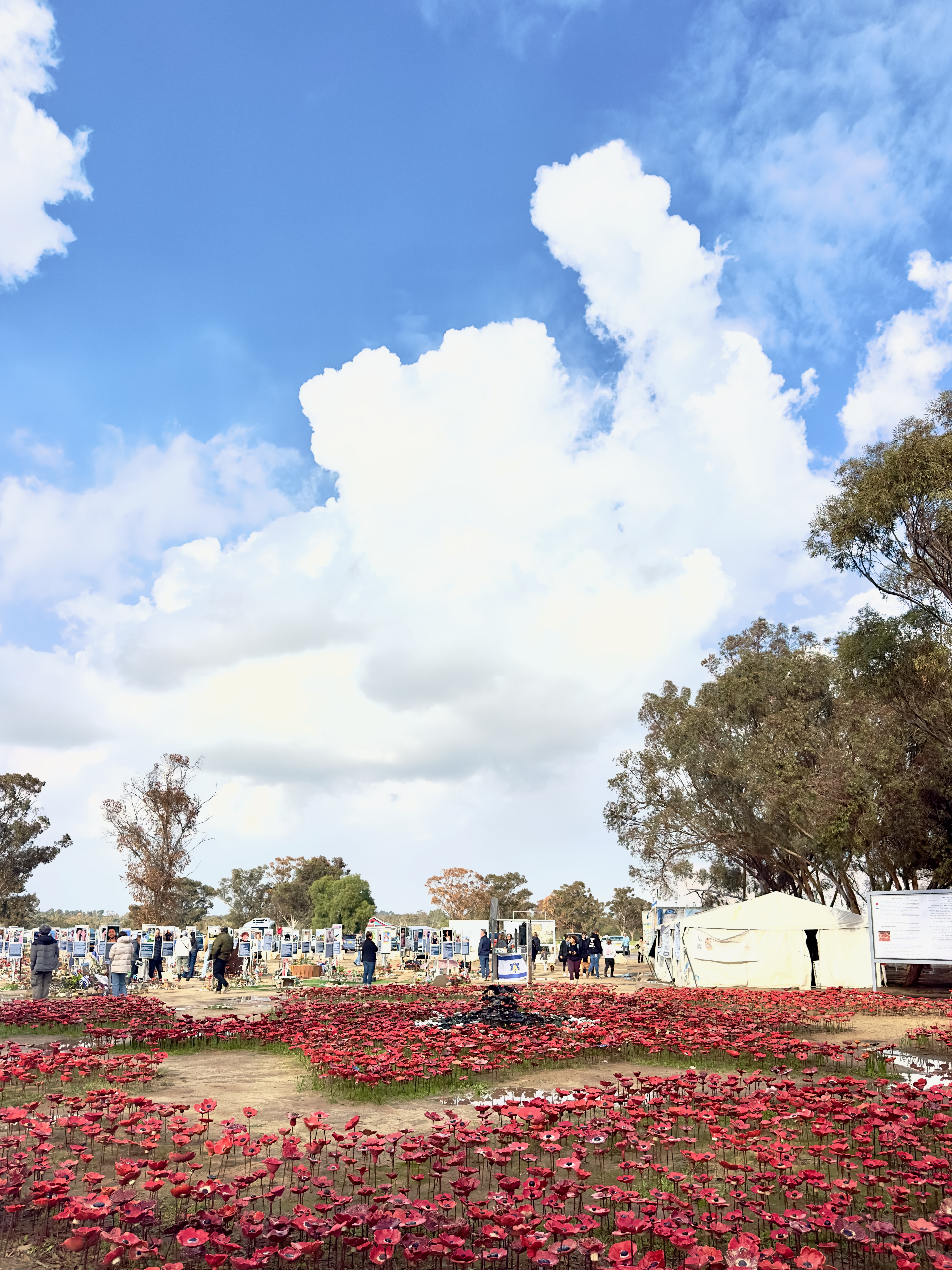
Down the way from the Nahal Oz memorial we drove to the site of the Nova festival. The asphalt on the road leading to Nova was still scarred by the tracks of army tanks from over two years ago. As we got out of our car, the bad weather briefly broke and the sun came out, a symbolic reminder of the shining young lives lost that day. We wandered awkwardly around the site, looking at the pictures of the murdered, reading about them, remembering the hundreds of young lives horribly cut short.

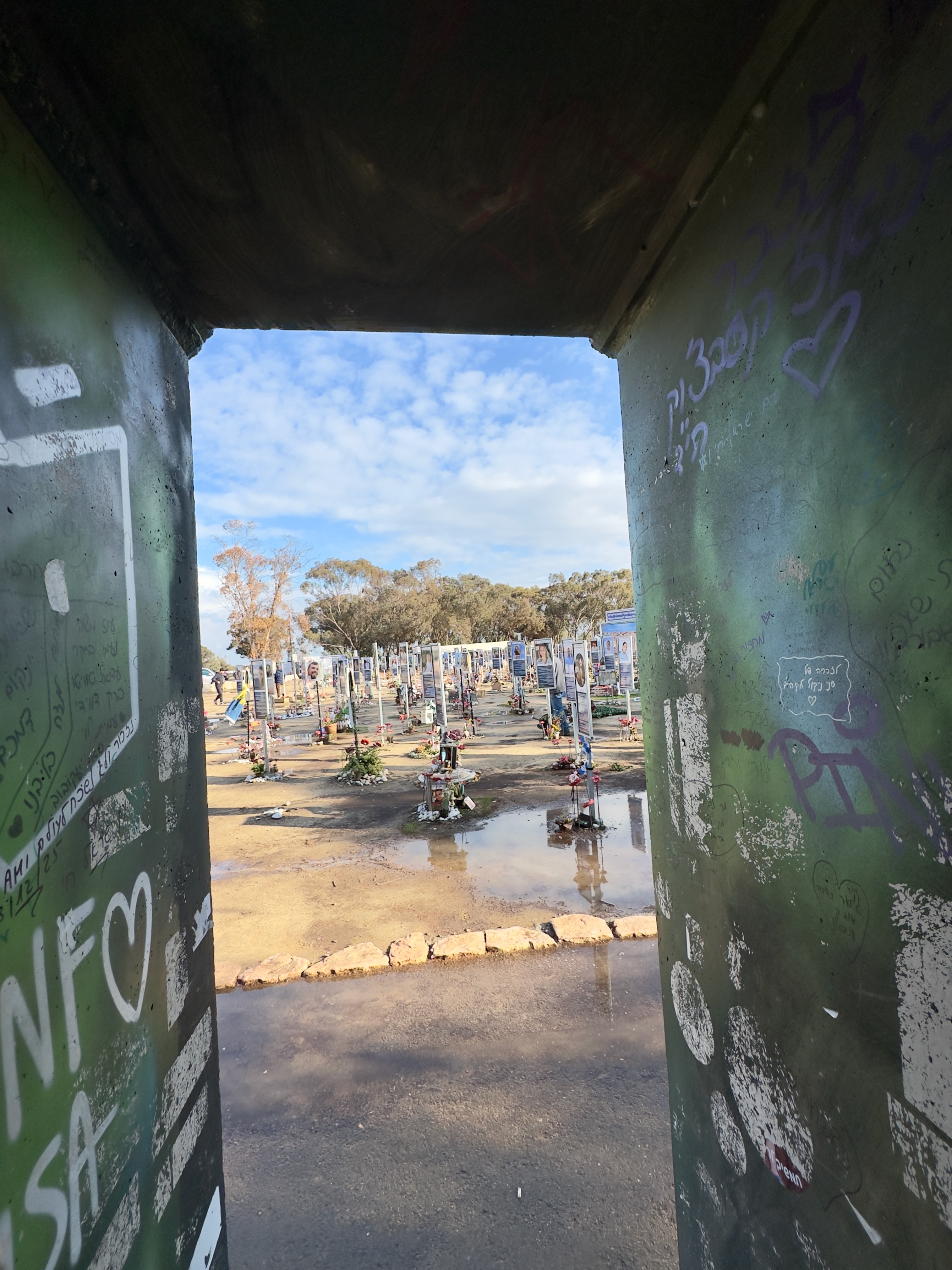
As a sober reminder of the danger posed by being so close to the Gaza border, a bomb shelter stands in the parking lot with a sign that reads:
“You are standing at the Nova site. Please note the area is under the threat of rockets. The time available to reach shelter here is 15 seconds”

Of the 3,400 people reportedly at Nova on October 7th, it is believed that 378 were murdered and another 44 abducted, 11 of whom were later killed in captivity.
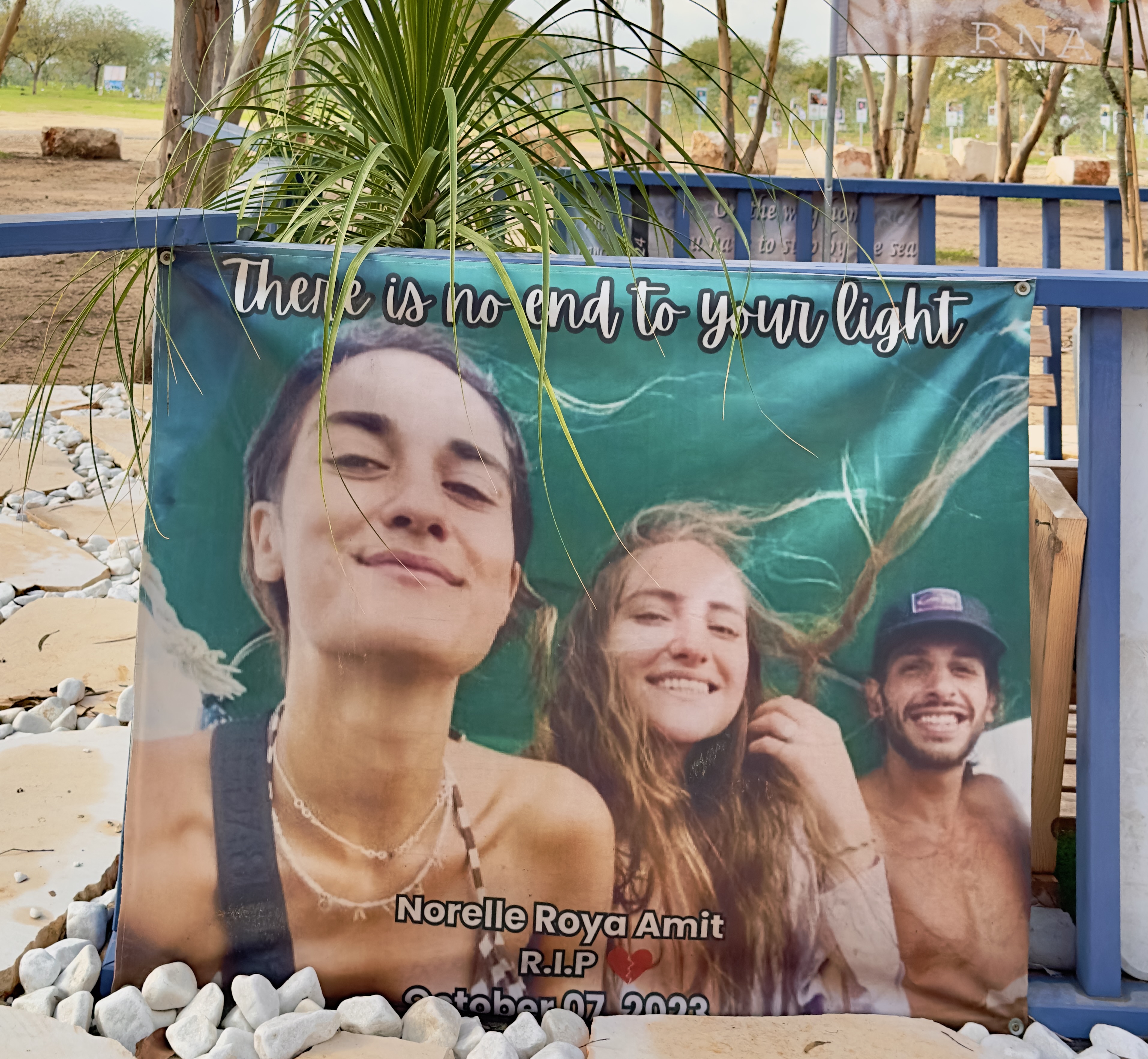
Among the dead at Nova:
• US born Norelle (25) and Roya (22) Sigal, along with Norelle’s boyfriend Amit Cohen (25) who planned to propose to her that week
• Ella Hamawy (26) who worked with children at her kibbutz
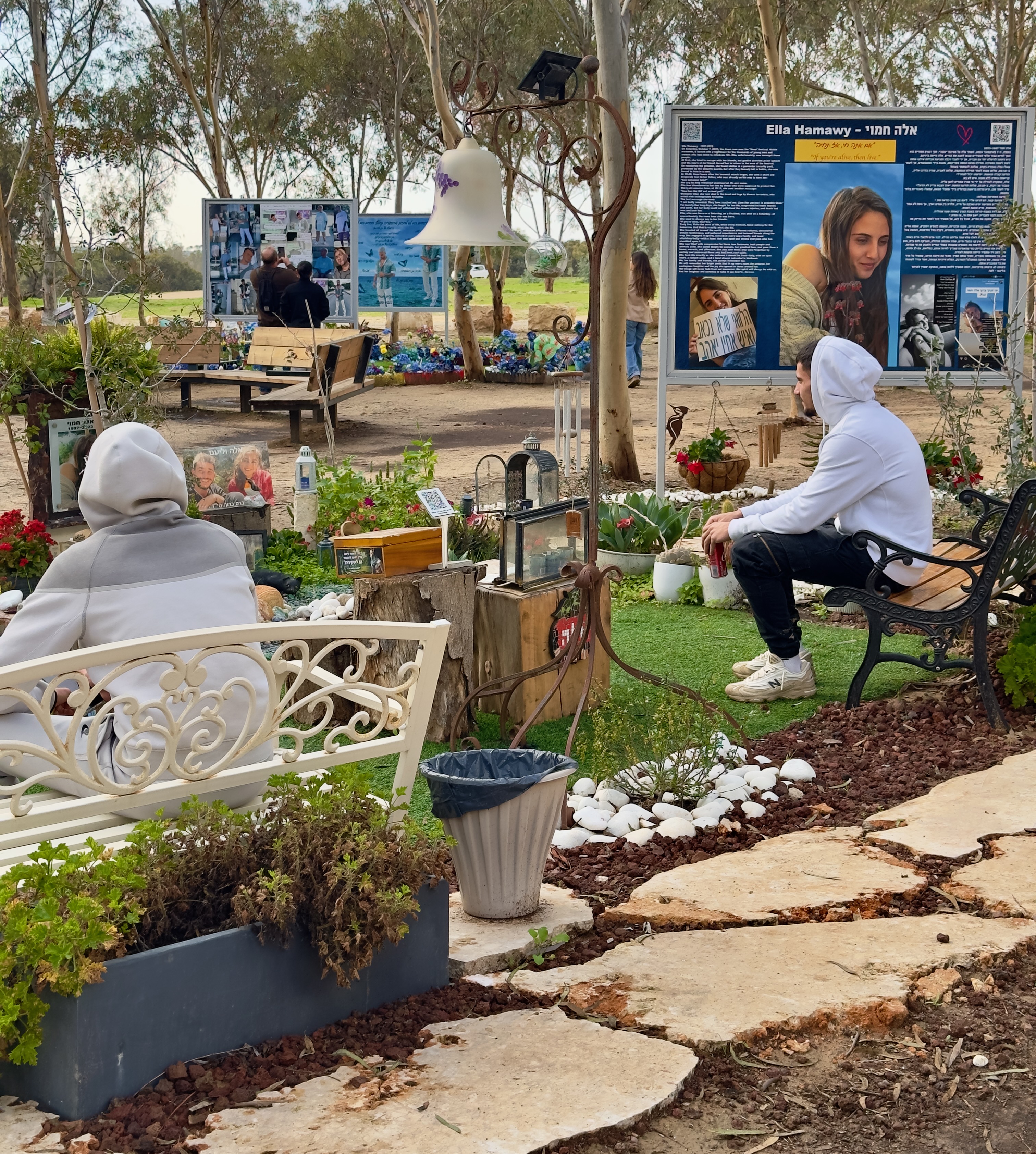
• Security officer Yulia Daonov (37), mother of 2, born in Ukraine.

• Idan Haramaty (22) and his girlfriend Ron Zarfaty (22)


• Israeli-American Jonathan Rom (23)
• Israeli-American Hersh Goldberg-Polin (23) who hid in a nearby bomb shelter and had his arm blown off as terrorists lobbed grenades into the shelter and he attempted to throw them back. Along with 5 other hostages, he was murdered by Hamas one year later in the tunnels.
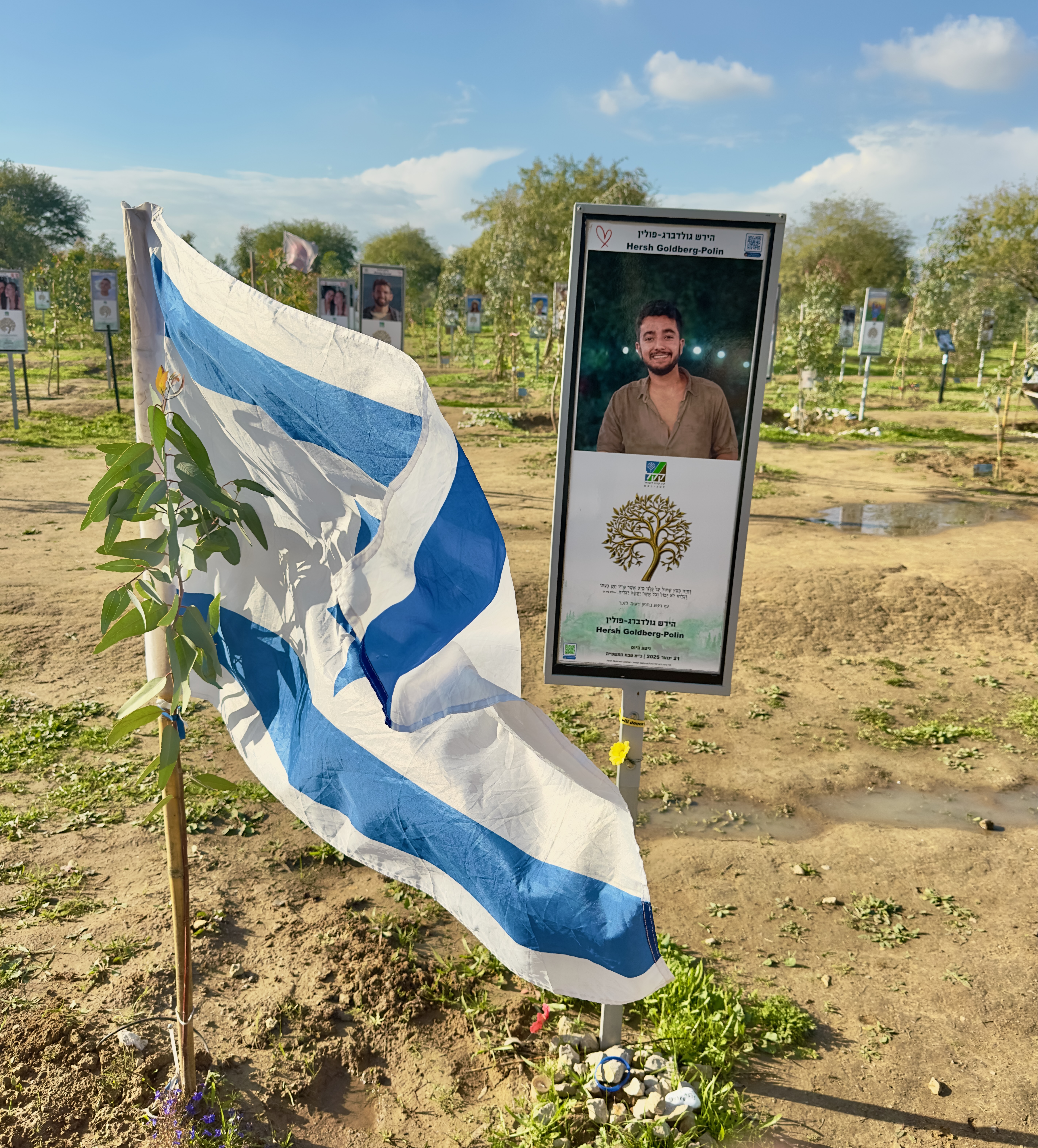
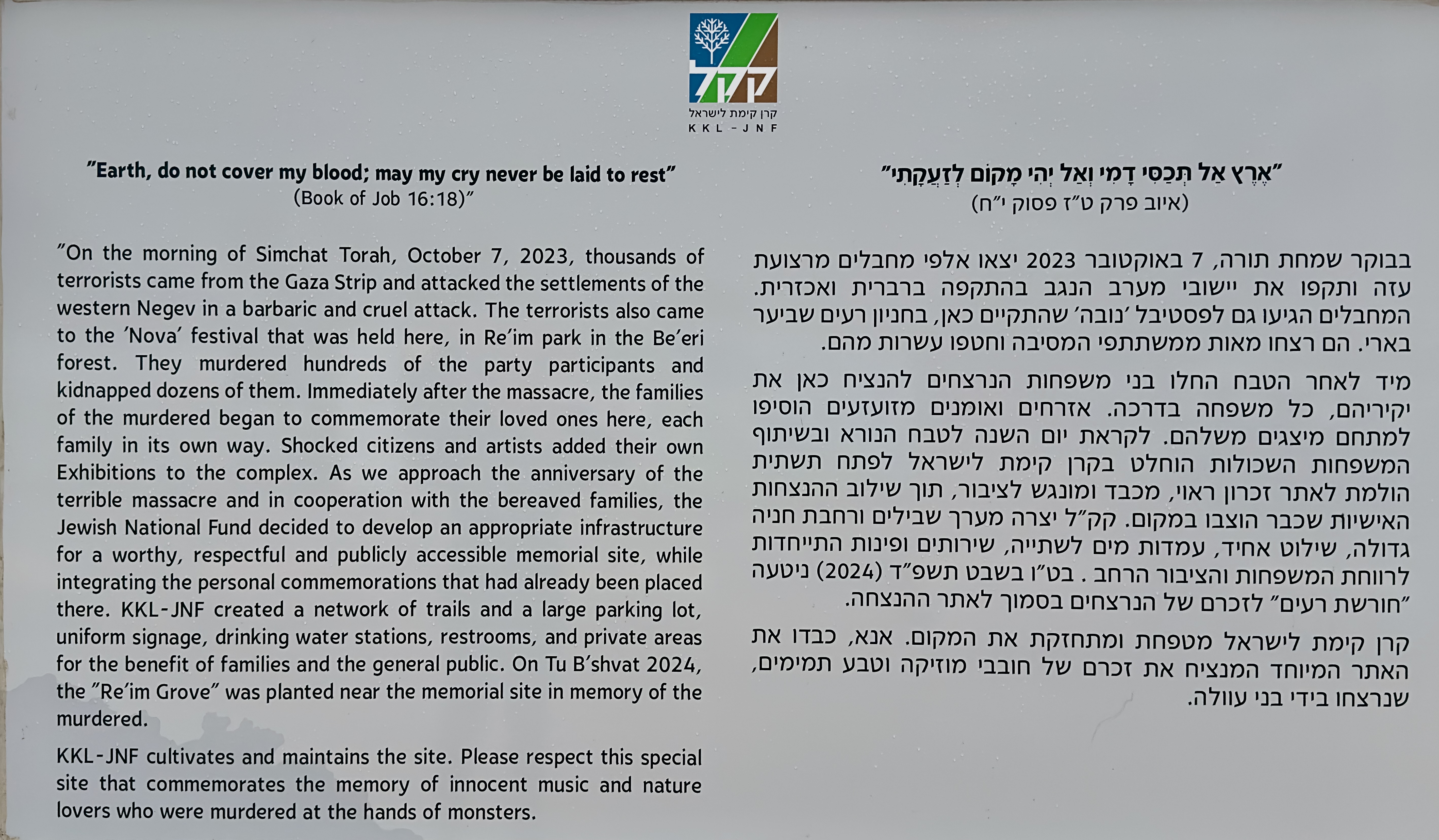
In the days and weeks following October 7, friends and relatives of the slain put up handmade signs. These makeshift memorials have now been replaced with uniform blue and white plaques designed by artist Amir Chodorov and funded by JNF. The signs tell each victim’s story in Hebrew and English. JNF has also created pathways, a parking lot and other infrastructure for visitors to the site.
Thousands of ceramic bright red anemones lay in the ground all around the memorial plaques. These wildflowers carpet the fields of southern Israel in early spring each year and symbolize the notion of blooming again amidst loss. We walked around the Nova site for some time with heavy hearts, mourning the hundreds of beautiful young faces that stared at us from the signs. There are simply no words to describe the horror of this mass murder.
Everyone in Israel knows someone who perished on October 7. Rona told us that three high school seniors from her moshav were at the festival along with their girlfriends. They were all killed.
Leaving the festival site, we drove along Route 232, the Blood Highway, past the Black Arrow memorial commemorating a 1956 battle and the Mefalsim Bend, where terrorists set up deadly ambushes killing dozens of civilians. The three arches may be familiar to viewers of the movie “The Road Between Us”, which tells the Oct 7 story of how a father rescued his son’s family who were trapped in their safe room at Kibbutz Nahal Oz, under siege by terrorists.

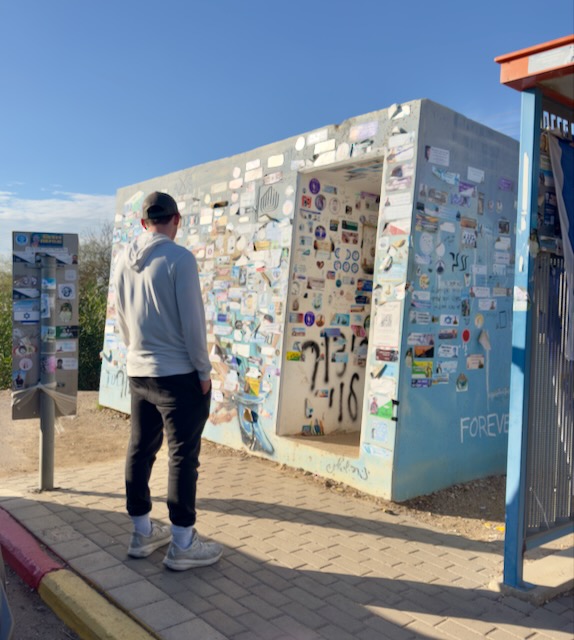
We stopped at a roadside bomb shelter where some of the festivalgoers fleeing Nova attempted to seek refuge, only to be bombarded by terrorist grenades. This was the shelter where Hersh Goldberg-Polin’s arm was blown off. The outside walls were plastered with stickers of hostages. Inside, the floor was covered with burnt memorial candles.

Be’eri and Netiv Ha’asera
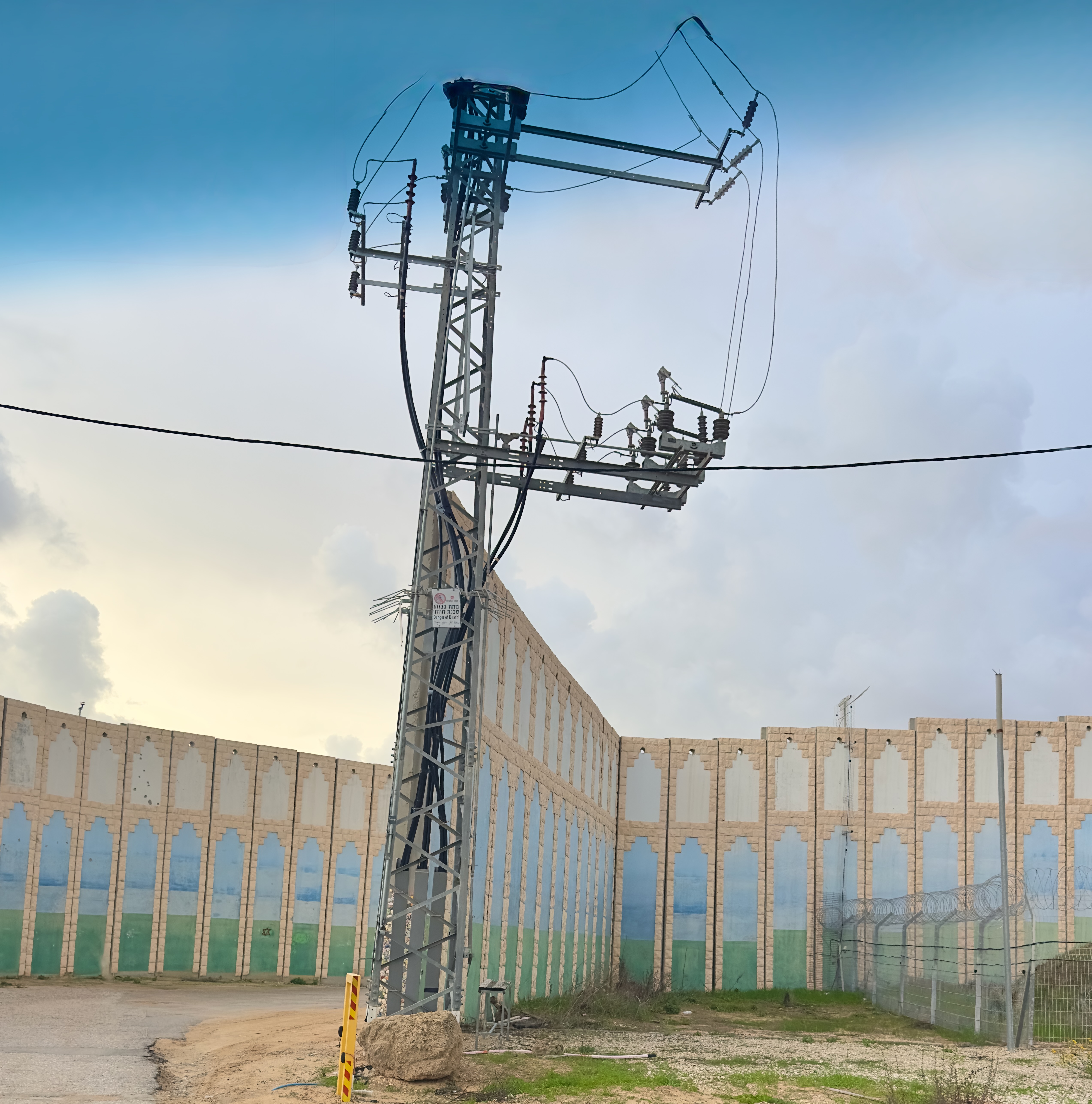
Passing Kibbutz Be’eri, we saw from the car windows a staggering number of bullet marks and fire damage on the rear walls of homes. Be’eri is where 101 people were murdered and 30 taken hostage, including 7-year-old Emily Hand and her friend 12-year-old Hila Rotem. The girls were held hostage in dark Gazan rooms with little food or water for 50 days.
Our last stop was border moshav Netiv Ha’asera, where 17 residents were murdered. The moshav’s homes stop just a few hundred feet from a border wall separating them from Gaza.
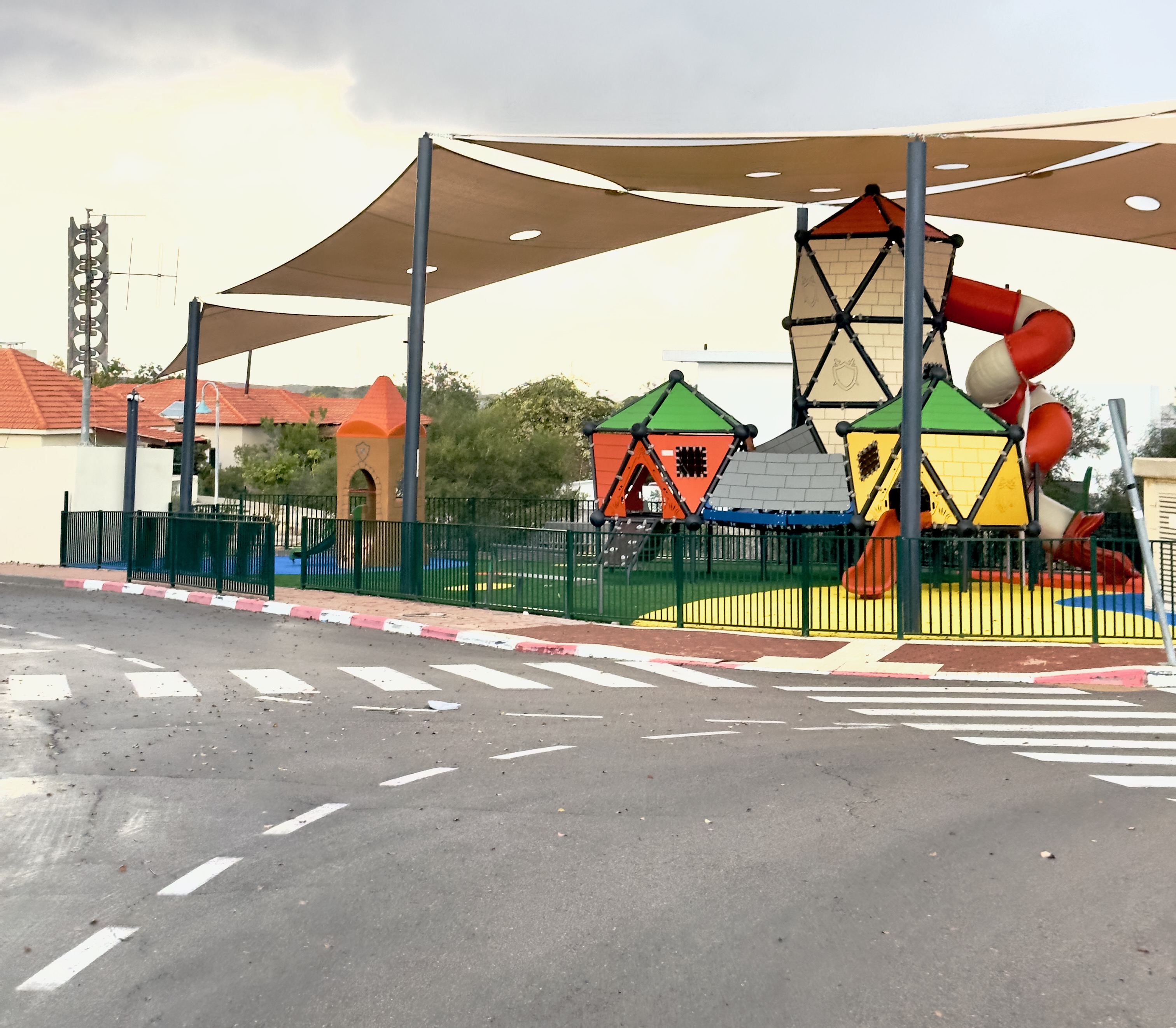
At 6:30 AM on October 7, several Hamas motorized paragliders landed next to the moshav’s colorful playground.
Terrorists went house to house murdering residents. A tape of one of their atrocities showed two young, injured boys crying for their father. Gil Tasa had fought off the invaders with a gun, then thrown himself on top of his sons in a safe room when terrorists threw a grenade inside. Shay, 8, and Koren,12, were wounded by the explosion. The terrorists stepped in to verify that Gil was dead, then casually and dispassionately raided the refrigerator for soda and drank it in front of the boys. Shay eventually lost one eye. Older brother Or, 17, had left earlier in the morning to go fishing on the beach at Zikim. He, along with 16 other civilians, was killed at Zikim while attempting to flee from the terrorists.
The Road North
Leaving the Gaza Envelope, carrying the profound burden of what we had seen and felt, we were taken by the sheer beauty of the landscape, the verdant fields, the richness of the land itself.
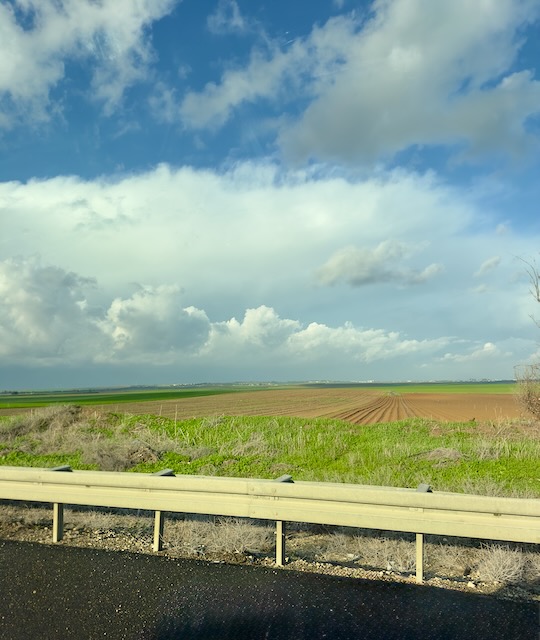
That such fields bore witness to so much bloodshed is simply incomprehensible. We thought also of the terrible sacrifices made by Israeli society over the past two years following October 7. The lives lost in the IDF. The wounded still recovering. Businesses ruined by men having to abandon them for army service. Families shattered by death of loved ones. Communities dispersed and depleted.
Rona told us of a saying from the Talmud: “If someone is coming to kill you, rise against him and kill him first. However, it should never be done with glee.”

 Marjorie Kaufman
Leave a comment